The Texas Film Commission's decision to potentially deny (the request was never officially made) incentive funds for the making of Waco, a film about the Branch Davidians has earned the Texas Legislature a Jefferson Muzzle award from the Thomas Jefferson Center. The Lege gets the credit because the decision was based on an incentives rider that says something the effect that no funds will go to projects that show the state in a negative light. Film Commish Bob Hudgins has contended factual errors were the basis for the decsion. See my Dallas Morning News article here.
Here's the press release:
“One objection I have heard voiced to works of this kind—dealing with Texas—is the amount of gore spilled across the pages. It cannot be otherwise. In order to write a realistic and true history of any part of the Southwest, one must narrate such things.”
– Robert E. Howard, an early 20th century American author and proud Texan.
For denying motion picture production companies tax breaks if their proposed movies portray Texas or Texans in a negative fashion, a 2010 Jefferson Muzzle goes to…
The Texas State Legislature
Waco is the working title of a planned movie production about the FBI’s 1993 siege of the Branch Davidian compound in Waco, Texas. This nearly two month long ordeal captivated the media across the nation and culminated in a shoot-out and fire, leaving 86 dead and more than 19 wounded, including 20 children. According to the movie’s production company, Entertainment 7, the film seeks to provide a historical account of the actions taken by the FBI and the Branch Davidians that led to the violent conclusion of the siege.
In order to encourage motion picture production in the state, Texas by statute offers a state rebate of up to 15% on in-state movie production costs. In 2007, the Texas State Legislature amended the Moving Image Industry Incentive Act to deny such incentives to films with “inappropriate content or content that portrays Texas or Texans in a negative fashion.” The amendment was given effect for the first time in 2009 when Bob Hudgins, Director of The Texas Film Commission and the state officer in charge of making such decisions, determined that Entertainment 7 would not be eligible for the tax incentives because “[a]fter reading the Waco script, I did some fact-checking and feel very confident in the checking I did. I talked to people, law enforcement and journalists who were actually involved in the whole incident. This was not something that was done lightly. This project steps outside an accurate portrayal of those events.” Although Entertainment 7 had yet to formally apply for the incentives, they had provided Hudgins with a copy of the Waco script in anticipation of doing so.
Entertainment 7 producer Emilio Ferrari strongly disputes Hudgins’ claims of the script’s inaccuracies: “Show me where in the script there is anything against Texas. Those are his two points: It’s against Texans and it’s inaccurate. Neither is correct.” Says Ferrari, “it’s not a movie about Texas. It’s about an incident that happened there, but it could happen anywhere.” Ferrari points to the film’s production staff including Mike McNulty, who co-wrote the 1997 Oscar-nominated documentary, Waco: The Rules of Engagement. “We did years of research on this project, and there’s nothing inaccurate in the script. We have not been told of any specific inaccuracies, and I’d really like to know,” states Ferrari.
Hudgins contends that the movie’s script compresses and simplifies the historic event. Actions that were taken by several individuals are attributed to a single character in the movie. Hudgins appears to deny that the extent of a movie’s factual distortion is a factor in determining its eligibility for the tax incentives. “Either it is (accurate) or it isn’t.”
Whether Entertainment 7 or Hudgins is correct about the historical accuracy of the Waco is irrelevant to the First Amendment principles at issue in this incident. No state is required to offer tax incentives to movie production companies. If a state chooses to do so, however, it cannot bestow those benefits in a manner that discriminates on the basis of the views expressed in the movie. Yet such discrimination is exactly what is required under the amendment to the Moving Image Industry Incentive Act. Under the terms of the amendment, a movie that took a critical of Texans such as Lyndon Baines Johnson or George W. Bush would be ineligible to receive the tax incentives. Moreover, the amendment conflates questions of historical accuracy with the determination of whether Texas or Texans are depicted in an unfavorable fashion. In passing the amendment, the Legislature for the State of Texas fails to recognize that there has never been a movie based on actual events that has depicted those events with 100% accuracy; history—whether detailed in a book or depicted in a movie—always involves a significant degree of subjective interpretation. For engaging in blatant viewpoint discrimination by passing legislation that presumes the only correct view of Texas or Texans is one which depicts them in a positive fashion, a 2010 Jefferson Muzzle is awarded to the Texas State Legislature.
Tuesday, April 13, 2010

Sunday, April 11, 2010
True Grit set in Granger grows as start date nears
UPDATE: See newer pix here.
I took another quick peek at the True Grit set in Fort Smith, ur, Granger today. One week after my last visit (when I thought it was pretty much complete) there are lots of new buildings that have been constructed--they are the smaller, free-standing structures you'll see here. I also noted a woman guarding what appears to be a corral being built (see second photo). Click on the photos to enlarge, then you'll be able to read some of the new signage. You can compare these to photos I took only a week ago.
According to this article, Granger's red brick road will be covered in a deep layer of dirt. The word I'm getting is the start of filming has been pushed back until at least April 26. Welcome back to Texas, Joel and Ethan Coen.


I took another quick peek at the True Grit set in Fort Smith, ur, Granger today. One week after my last visit (when I thought it was pretty much complete) there are lots of new buildings that have been constructed--they are the smaller, free-standing structures you'll see here. I also noted a woman guarding what appears to be a corral being built (see second photo). Click on the photos to enlarge, then you'll be able to read some of the new signage. You can compare these to photos I took only a week ago.
According to this article, Granger's red brick road will be covered in a deep layer of dirt. The word I'm getting is the start of filming has been pushed back until at least April 26. Welcome back to Texas, Joel and Ethan Coen.


Saturday, April 10, 2010
Rob Thomas moves back to Austin

Veronica Mars creator Rob Thomas has moved back to Austin, apparently tired of the Los Angeles grind. That tidbit was revealed recently at John Pierson's master class at the University of Texas, a source tells me. Also at the event, Thomas said he's still very much interested in developing a series called Waterloo, which has been described as a "coming-of-age story involving a rock band, and it is loosely based on Thomas' youthful adventures" with the Austin/San Marcos band Hey Zeus and somehow involves the South by Southwest Music Festival. But for now the series idea is dead in the water.
Thomas is also developing a show called Plymouth Rock for the CW with some of his former Veronica Mars cohorts. It's been described as "a soap set aboard a spaceship and revolves around young people headed to a distant planet with a mission to colonize and procreate to save the human race."
Sunday, April 4, 2010
Granger is ready for "True Grit'
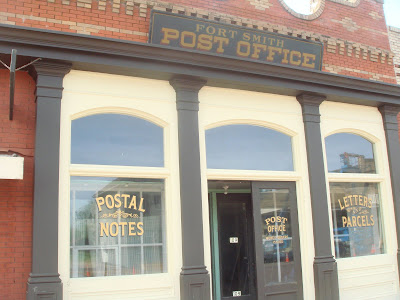
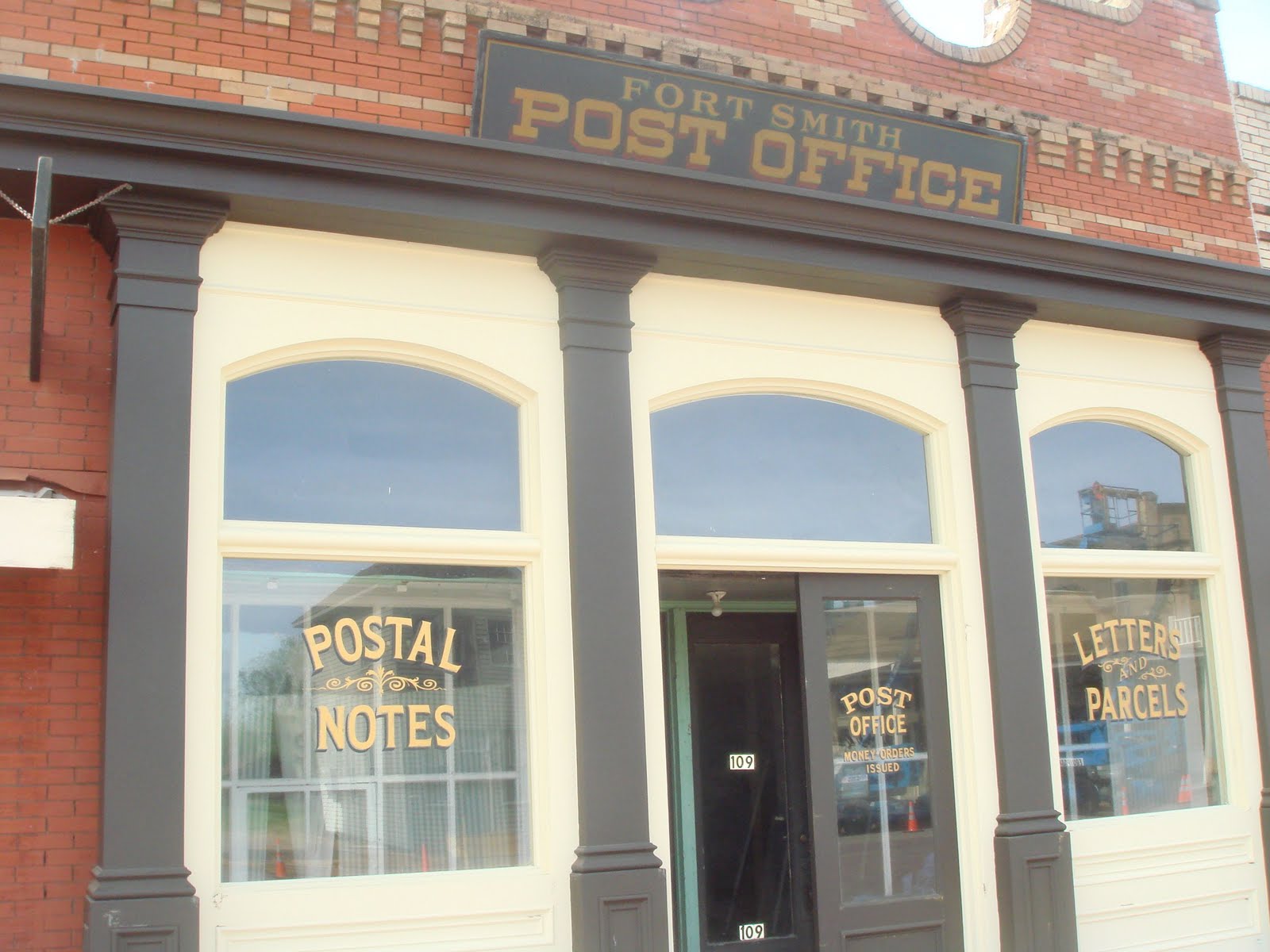
I took these photos of the True Grit set Saturday morning as we were passing through Granger. You can compare with my earlier photos and you'll see the progress. When we passed through Saturday night, bright lights lit up the street, but we saw no signs that the Coen brothers' filming had actually begun. I would expect it to start soon.





Friday, April 2, 2010
Michael Nesmith again recharges future of music

That's Nesmith partially hidden between the members of Michele Malone's band and emcee A. Whitney Brown.
My last word about Video Ranch 3D in today's Dallas Morning News. Michael Nesmith personally invited me to view filming during SXSW. How could I refuse a Monkee?
Tuesday, March 30, 2010
True Grit needs a one-armed lady
No that's a song title in the making. Here's the scoop:
Paramount Pictures is seeking a WOMAN MISSING HER LEFT ARM to be a photo double in the film, TRUE GRIT, a new film by Joel & Ethan Coen.
Character description: Photo double for adult Mattie Ross: This woman must be MISSING HER LEFT ARM. Optimally, she would be around 5'8", 138 lbs, slender to medium build. However, we are open to various looks.
To submit: Please do so asap! Send photos, measurements & contact information to texascasting2010@gmail.com. Photos should be non-glamorous, simple snapshots (incl face and body. It's best to wear a tank top & shorts). Measurements should include height, weight, bust, waist & hips. Include age, phone numbers & place of residence. Approrpriate candidates may also call our office at 512-637-6775.
Rate of pay: TBD
Note: TRUE GRIT is shooting in Austin, TX. However, we are open to nationwide submissions.
Paramount Pictures is seeking a WOMAN MISSING HER LEFT ARM to be a photo double in the film, TRUE GRIT, a new film by Joel & Ethan Coen.
Character description: Photo double for adult Mattie Ross: This woman must be MISSING HER LEFT ARM. Optimally, she would be around 5'8", 138 lbs, slender to medium build. However, we are open to various looks.
To submit: Please do so asap! Send photos, measurements & contact information to texascasting2010@gmail.com. Photos should be non-glamorous, simple snapshots (incl face and body. It's best to wear a tank top & shorts). Measurements should include height, weight, bust, waist & hips. Include age, phone numbers & place of residence. Approrpriate candidates may also call our office at 512-637-6775.
Rate of pay: TBD
Note: TRUE GRIT is shooting in Austin, TX. However, we are open to nationwide submissions.
Monday, March 22, 2010
The halfway point in writing a novella?
Our graduate class at St. Edward's University is at the midpoint in writing a 40,000-word novella in a semester. The inspiration for teaching this course was hearing Mary Kay Zuravleff talking at the Association of Writers and Writing Programs about teaching just such a course. Here I am culling some of the notes she posted about that class so my class can see them. They may be interesting to other writers as well:
Halfway Point
Notes from Mary Kay Zuravleff
We are halfway through our NOVELLAS (or very close)!
Now is not the time to ask if these words will become the book we each hope to write. Right now, process is nearly all. This much writing can only be good for us, and we’re feeling old muscles and new synapses afire.
But it may be time to ask, halfway through what? Writer Scott Berg talks about the novel as a series of small explosions on their way to a bigger explosion. My own image is of story as arrow, a short story being one arrow aimed at a bull’s-eye, and the novel a quiver of arrows that ultimately cluster around the target’s center. Halfway through, how many arrows have you got off? Has anything exploded?
Turn It Upside Down
In response to our thoughts on the creative process, we can look at visual artists. One described his artistic method as archaeology; after layering on colors and encaustic, he has to discover the painting within. This welcome notion reminded me of advice to writers to go deeper rather than wider.
I posed the question “Where is the painting before it’s a painting?” to Olivia Petrides, who wrote, “It has been my despair that I make it up as I go along, because I want CONTROL! The answers seem to lie within the paint, how it moves or how I accidentally move it—the stuff is so slippery and my mind is so wracked with its own anxious workings that it's a wonder I get any work done at all.”
Seems we're always surprised anew when confusion becomes a force for creativity. As for inspiration, Olivia offered these tips: “I turned the painting upside down this morning and got an idea for a slight restructuring of the image, and I remembered an element of a famous painting that I can rip off. Now I'm started again with some excitement. Can you turn anything upside down?”
We certainly can. We can also dig for buried treasure among the plot and characters fashioned thus far. And we can take a page from famous writers, trying on literary accessories that have long intrigued us. You never know what point of view goes with what purse until you try.
Spinning webs of connection
If the conspiracy theory of novel-writing holds, there is a giant web of connections that you will eventually expose or discover or build through your characters.
Every time you glimpse a connection, you go back and shore up the web, even if you just write a few words in brackets to prompt yourself later. You know how you tell a joke when you only remember the punch line? A guy walks into a bar and—oh, I forgot, he’s a fireman—he walks into the bar—oh, the bar is on top of the Empire State Building—anyway, he orders a drink—did I mention he’s really short? he is—etc. In this way, you are moving forward but also clarifying your earlier hunches. And you’ll always be able to find that gin and tonic recipe.
Picking a fight
We’re looking for a fight. How could that character’s worst habit or secret be brought to light? Would her husband still love her? Would he lose his job? Oh, there’s a knock at another character’s office door—mind if I come in? I’ll only rob you blind. Or I’ll offer you exactly what you want, with some tangled strings attached. Just as we’re fast-forwarding process in this class, novels themselves fast-forward insight and action. Why tell the story of this particular day or life?
Your challenge this week is to make your characters squirm. Think of how boring the first few moves of a chess game are, then prepare to move your pawns one or two steps away from safety.
A novel can go in through the navel or groin, like a laparoscopic procedure, to explore the blood and guts within. So divorce or stay married, perhaps switching husband-wife roles. Start cutting up carrots and then slice everything in the kitchen. Or train for the marathon despite injuries and doubt. Car chases and trials aren’t necessary as long as you captivate us.
Building a novella
We are walking along a rickety bridge; in fact, we’re actually constructing the bridge as we take each precarious step. Recycled planks, rubbery beams the width of a straw and composed of untested materials, mirrored funky buttresses that may or may not hold weight—now is not the time to invite the inspectors over for a look-see.
And so, we continued our exhilarating, ridiculous bridge-building.
My Aim Is True
In yoga, the way to stay upright in balance poses is to focus on a spot in the distance and imagine a tether from that spot to you, holding you vertical. Of course, the challenge for those of us writing out on a limb is: can we see that spot in the distance?
With that in mind, revisit books you admire—bring the most instructive one to class next time. See how all the authorial decisions contribute toward the story. We don’t know if the authors had the footprint and span of their story when they began, or if choices they made determined the architecture of their tale. So why not indulge your first impulses. No chapter breaks? Present tense? First person who is reliable as long as she stays away from the scotch? Main character reports for Voice of America and can only use words from the approved list of Basic English? Nail that story down.
If the novel we build dictates structural changes, then we’ll cross that bridge when we come to it.
Halfway Point
Notes from Mary Kay Zuravleff
We are halfway through our NOVELLAS (or very close)!
Now is not the time to ask if these words will become the book we each hope to write. Right now, process is nearly all. This much writing can only be good for us, and we’re feeling old muscles and new synapses afire.
But it may be time to ask, halfway through what? Writer Scott Berg talks about the novel as a series of small explosions on their way to a bigger explosion. My own image is of story as arrow, a short story being one arrow aimed at a bull’s-eye, and the novel a quiver of arrows that ultimately cluster around the target’s center. Halfway through, how many arrows have you got off? Has anything exploded?
Turn It Upside Down
In response to our thoughts on the creative process, we can look at visual artists. One described his artistic method as archaeology; after layering on colors and encaustic, he has to discover the painting within. This welcome notion reminded me of advice to writers to go deeper rather than wider.
I posed the question “Where is the painting before it’s a painting?” to Olivia Petrides, who wrote, “It has been my despair that I make it up as I go along, because I want CONTROL! The answers seem to lie within the paint, how it moves or how I accidentally move it—the stuff is so slippery and my mind is so wracked with its own anxious workings that it's a wonder I get any work done at all.”
Seems we're always surprised anew when confusion becomes a force for creativity. As for inspiration, Olivia offered these tips: “I turned the painting upside down this morning and got an idea for a slight restructuring of the image, and I remembered an element of a famous painting that I can rip off. Now I'm started again with some excitement. Can you turn anything upside down?”
We certainly can. We can also dig for buried treasure among the plot and characters fashioned thus far. And we can take a page from famous writers, trying on literary accessories that have long intrigued us. You never know what point of view goes with what purse until you try.
Spinning webs of connection
If the conspiracy theory of novel-writing holds, there is a giant web of connections that you will eventually expose or discover or build through your characters.
Every time you glimpse a connection, you go back and shore up the web, even if you just write a few words in brackets to prompt yourself later. You know how you tell a joke when you only remember the punch line? A guy walks into a bar and—oh, I forgot, he’s a fireman—he walks into the bar—oh, the bar is on top of the Empire State Building—anyway, he orders a drink—did I mention he’s really short? he is—etc. In this way, you are moving forward but also clarifying your earlier hunches. And you’ll always be able to find that gin and tonic recipe.
Picking a fight
We’re looking for a fight. How could that character’s worst habit or secret be brought to light? Would her husband still love her? Would he lose his job? Oh, there’s a knock at another character’s office door—mind if I come in? I’ll only rob you blind. Or I’ll offer you exactly what you want, with some tangled strings attached. Just as we’re fast-forwarding process in this class, novels themselves fast-forward insight and action. Why tell the story of this particular day or life?
Your challenge this week is to make your characters squirm. Think of how boring the first few moves of a chess game are, then prepare to move your pawns one or two steps away from safety.
A novel can go in through the navel or groin, like a laparoscopic procedure, to explore the blood and guts within. So divorce or stay married, perhaps switching husband-wife roles. Start cutting up carrots and then slice everything in the kitchen. Or train for the marathon despite injuries and doubt. Car chases and trials aren’t necessary as long as you captivate us.
Building a novella
We are walking along a rickety bridge; in fact, we’re actually constructing the bridge as we take each precarious step. Recycled planks, rubbery beams the width of a straw and composed of untested materials, mirrored funky buttresses that may or may not hold weight—now is not the time to invite the inspectors over for a look-see.
And so, we continued our exhilarating, ridiculous bridge-building.
My Aim Is True
In yoga, the way to stay upright in balance poses is to focus on a spot in the distance and imagine a tether from that spot to you, holding you vertical. Of course, the challenge for those of us writing out on a limb is: can we see that spot in the distance?
With that in mind, revisit books you admire—bring the most instructive one to class next time. See how all the authorial decisions contribute toward the story. We don’t know if the authors had the footprint and span of their story when they began, or if choices they made determined the architecture of their tale. So why not indulge your first impulses. No chapter breaks? Present tense? First person who is reliable as long as she stays away from the scotch? Main character reports for Voice of America and can only use words from the approved list of Basic English? Nail that story down.
If the novel we build dictates structural changes, then we’ll cross that bridge when we come to it.
Subscribe to:
Posts (Atom)

